Senior Door Refinishing Specialists · CaliRefinishing
⏱ 10 min read · Published August 2026 · Serving Los Angeles & Surrounding Areas
There is nothing quite like the warmth, elegance, and timeless appeal of natural hardwood floors. Whether you own a historic Craftsman in Pasadena, a Mid-Century Modern estate in the Hollywood Hills, or a contemporary beachfront property in Malibu, your hardwood floors are a foundational element of your home’s aesthetic and financial value. However, years of foot traffic, pet claws, shifting furniture, and the unique environmental demands of Southern California can leave even the highest-quality wood looking dull, scratched, and faded. When standard cleaning and polishing are no longer enough, professional wood floor refinishing in Los Angeles is the definitive solution to bring your living spaces back to life.
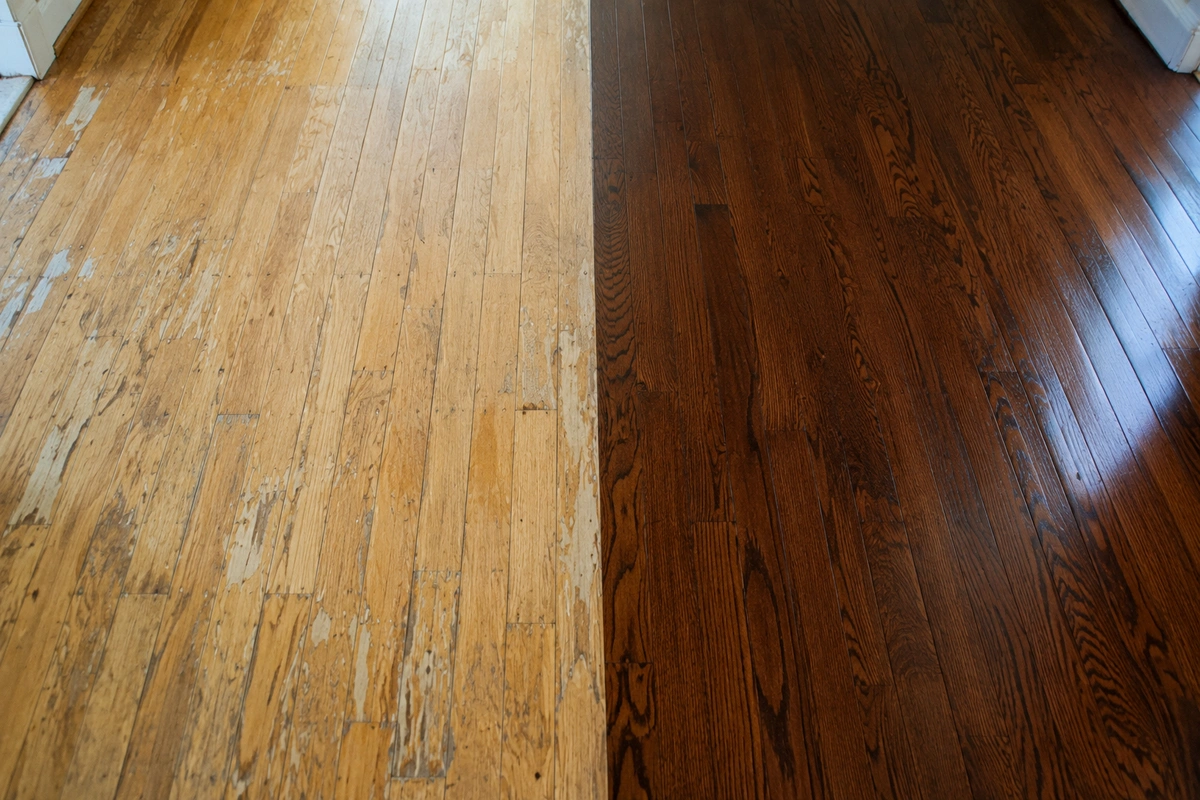
At California Door & Wood Restoration, we understand that your floors are an investment. Replacing solid hardwood is an incredibly expensive and disruptive process. Refinishing, when executed by seasoned professionals using state-of-the-art equipment, strips away decades of damage to reveal the pristine, untouched wood grain lying just beneath the surface. From there, the possibilities are endless. You can restore the original color to maintain historical accuracy or apply a completely new, modern stain to update your home’s interior design.
This comprehensive guide will walk you through everything you need to know about hardwood floor restoration in the Greater Los Angeles area. We will explore how local microclimates impact your wood, detail our advanced dustless sanding process, compare the best protective finishes available on the market, and explain why trusting a specialist yields vastly superior results compared to DIY attempts. Our mission is to provide you with the knowledge needed to make an informed decision and the expert craftsmanship required to deliver breathtaking results.
Why Los Angeles Hardwood Floors Require Specialized Care
Southern California is famous for its beautiful weather, but the same elements that make the region a wonderful place to live can wreak havoc on natural wood surfaces. Hardwood is a hygroscopic material, meaning it constantly absorbs and releases moisture in response to its environment. Without the right protective strategies and professional door refinishing services for your entryways to match, your interior floors are left vulnerable to a variety of unique local threats.
Let’s Talk About Your Project Today
The Impact of Southern California Microclimates
Los Angeles is defined by its diverse microclimates. Homes situated along the coast experience frequent marine layers and high humidity, which can cause wood planks to swell, cup, or buckle if not properly sealed. Conversely, properties in the San Fernando Valley endure prolonged periods of intense dry heat, leading to wood shrinkage, gapping between boards, and brittle surface finishes. When evaluating a restoration project, we must consider these environmental factors to select the appropriate moisture-resistant or flexible finish that will allow your floors to expand and contract safely without cracking. For instance, Santa Monica exterior wood care protocols differ vastly from the preventative measures required for dry, inland valley homes.
UV Exposure and Sun Damage from Expansive Windows
Modern Los Angeles architecture heavily favors expansive glass, sliding doors, and oversized windows to merge indoor and outdoor living. While beautiful, this design exposes your hardwood floors to punishing ultraviolet (UV) radiation. Over time, UV rays trigger a photochemical reaction in both the wood and the finish. Some species, like cherry, will drastically darken, while others, like red oak, will bleach and turn yellow. Furthermore, prolonged heat exposure can bake the protective topcoat, causing it to peel and flake. We utilize advanced, UV-inhibiting finishes specifically engineered to prevent photo-oxidation, offering the same level of rigorous protection you would expect from our specialized sun-damaged wood repair services.
Our Comprehensive Wood Floor Refinishing Process
Achieving a flawless, factory-grade finish on an existing hardwood floor is not simply a matter of running a sander and brushing on polyurethane. It is a highly technical, multi-step process that requires precision, patience, and a deep understanding of wood chemistry. We have refined our methodology over years of practice to ensure maximum durability, breathtaking aesthetics, and minimal disruption to your daily life.
Step 1: Detailed Inspection and Moisture Testing
Before any machinery is turned on, we conduct a rigorous diagnostic assessment of your floors. We identify the specific wood species, measure the remaining thickness of the wear layer (crucial for engineered hardwoods), and check for structural issues like loose subfloors, deep gouges, or termite damage. We also utilize electronic moisture meters to map the ambient humidity of the wood. If the moisture content is too high or too low, applying a finish can lead to disastrous peeling or clouding. This meticulous planning is the same foundational approach we apply to our complex commercial wood restoration projects across the city.
Step 2: Precision Repairs and Wood Filling
A refinished floor will only ever look as good as the canvas beneath it. We carefully replace any unsalvageable boards, splicing in new planks and staggering the joints so the repair is completely invisible. Next, we address the gaps, cracks, and nail holes. Using a specialized wood filler that is troweled across the entire surface (or spot-applied for minor flaws), we create a perfectly smooth, uniform plane. The filler is expertly tinted to match the raw wood, ensuring it will absorb the stain evenly during the coloring phase.
Door Refinishing West Hollywood
Step 3: Advanced Dustless Sanding Technology
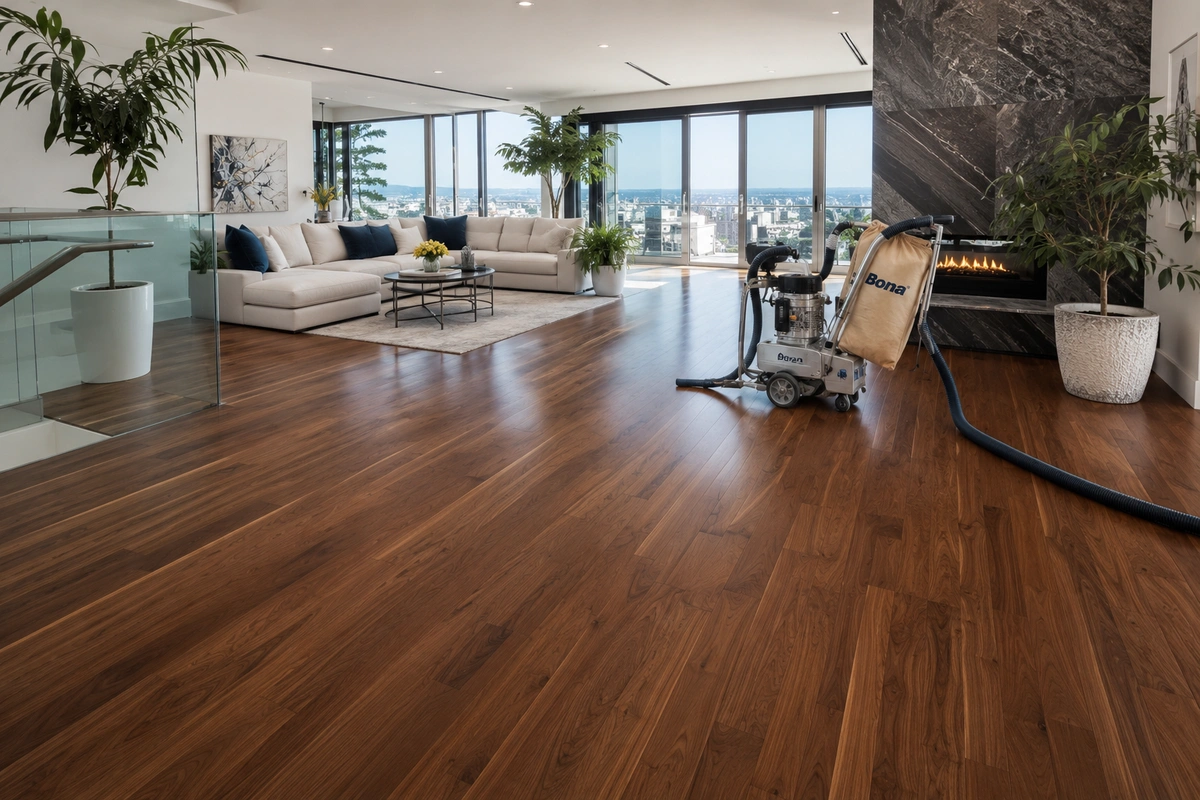
Historically, floor sanding was a nightmare that left homes coated in toxic silica dust for months. We have eliminated this problem by investing in advanced dustless sanding technology. Our heavy-duty belt sanders, edgers, and planetary buffers are hooked directly to industrial HEPA vacuums. As the machine strips away the old aluminum oxide finishes, scratches, and stains, the dust is immediately evacuated before it can become airborne. We progress through multiple grits of abrasives—typically starting at a coarse 36-grit to flatten the floor, moving to 60-grit to remove deep scratches, and finishing with 80-to-100-grit to perfectly smooth the grain. This is the gold standard of wood stripping and sanding, protecting your indoor air quality and your HVAC system.
Step 4: Water Popping for Deep, Even Color
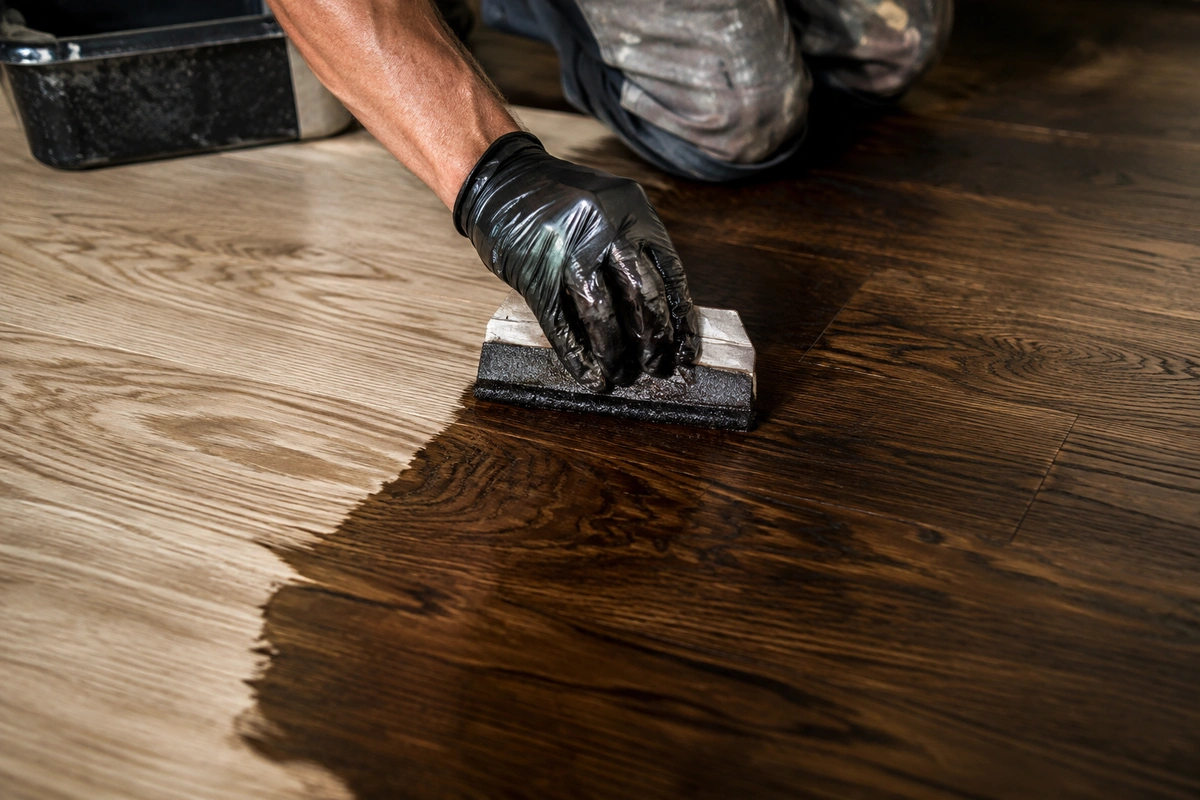
If you elect to stain your floors a new color, we utilize a professional technique known as “water popping.” After the final sanding pass, the wood grain is tightly closed. We mist the entire floor with a precisely measured amount of purified water. This causes the wood fibers to swell and the cellular “pores” of the wood to open up. When the stain is applied to a water-popped floor, the pigments penetrate significantly deeper and more evenly. This eliminates the blotchy, uneven appearance commonly seen in amateur refinishing jobs and results in a dramatically richer, more saturated color profile.
Step 5: Custom Wood Staining and Color Matching
The staining phase is where the artistic transformation occurs. Whether you desire a deep, sophisticated Jacobean brown, a modern whitewashed aesthetic, or a classic warm chestnut, we offer endless color possibilities. We can mix customized hues to perfectly match your existing cabinetry, trim, or the architectural style of your home. We apply the stain by hand, meticulously working it into the grain and buffing off the excess to highlight the natural beauty of the wood. This bespoke approach mirrors the high-end artistry we utilize for custom wood staining on luxury cabinetry and millwork.
Step 6: Applying High-Durability Protective Finishes
The final and most critical step is the application of the protective topcoats. The finish is what stands between your delicate wood and the harsh realities of daily life—shoes, spills, pet claws, and dropped objects. We apply multiple coats of premium, commercial-grade sealers and finishes, buffing the floor between each coat to ensure a molecular bond and a perfectly smooth texture. The result is a resilient, waterproof, and visually stunning barrier that will protect your investment for decades to come.
Door Refinishing Beverly Hills
Comparing Wood Floor Finishes: Which is Right for Your Home?
Choosing the right finish is just as important as choosing the right stain color. The finish dictates how your floor will look (matte, satin, semi-gloss, or high-gloss), how it will feel underfoot, and how it will withstand daily wear and tear. Different households have different operational needs; a quiet home with a single occupant requires a different protective strategy than a bustling household with large dogs and young children.
To help you make an informed decision, we have compiled a comparison table of the industry’s top finish categories:
| Finish Type | Durability Level | Dry / Cure Time | VOC Levels & Odor | Best Application & Visual Effect |
|---|---|---|---|---|
| Water-Based Polyurethane | Very High (Commercial Grade) | 2-4 hours (dry), 7 days (cure) | Low VOC, minimal odor | Best for modern homes, light-colored wood. Non-yellowing, clear finish. |
| Oil-Based Polyurethane | High | 10-24 hours (dry), 30 days (cure) | High VOC, strong odor | Best for traditional aesthetics. Imparts an amber glow that deepens over time. |
| Hardwax Oils (e.g., Rubio) | Medium / Easily Repairable | 24 hours (dry), 5 days (cure) | Zero VOC, no odor | Best for luxury, matte, natural aesthetics. Penetrates wood rather than sitting on top. |
| Acid-Cured (Swedish Finish) | Extreme | 4-8 hours (dry), 60 days (cure) | Extreme VOC, toxic odor | Best for exotic woods and extreme traffic. Highly toxic during application. |
Water-Based Polyurethane
Water-based polyurethane has revolutionized the floor refinishing industry. Leading brands like Bona Traffic HD offer commercial-grade durability that surpasses traditional oil-based options. The primary advantage of water-based polyurethane is that it dries crystal clear and remains clear for the lifespan of the floor. It will not yellow or amber over time, making it the perfect choice for gray stains, whitewashes, or natural blonde woods like maple. Additionally, it dries incredibly fast (often allowing for multiple coats in a single day) and features very low Volatile Organic Compounds (VOCs), meaning your home won’t smell like toxic chemicals for weeks.
Oil-Based Polyurethane
Oil-based polyurethane is the traditional, old-school standard for wood floors. It is highly durable and cost-effective. Unlike water-based finishes, oil-based poly imparts a distinct amber, honey-colored glow to the wood. Over time, exposure to sunlight will cause this finish to yellow and darken further. For homeowners with antique homes, dark stains, or those who love the classic, warm “golden oak” look, oil-based polyurethane is an excellent choice. However, the drawbacks are significant: it requires 12 to 24 hours to dry between coats, and the off-gassing produces a very strong, pungent odor that requires excellent ventilation and often necessitates vacating the home during the curing process.
Hardwax Oils and Penetrating Finishes
For those seeking the ultimate luxury aesthetic and an eco-friendly footprint, hardwax oils (such as Rubio Monocoat or Pallmann Magic Oil) are unparalleled. Rather than forming a plastic-like film on top of the wood like polyurethane, these products penetrate deep into the cellular structure of the wood fibers, bonding molecularly. This leaves the wood looking and feeling completely natural, with an elegant, ultra-matte finish. While they are slightly less resistant to chemical spills, their greatest advantage is repairability. If a polyurethane floor gets a deep scratch, the entire floor often needs to be recoated. With hardwax oils, you can simply sand and re-oil the damaged spot, and it will blend flawlessly. This penetrative science is identical to the techniques we use for high-end outdoor wood finishes on luxury decks and pergolas.
Understanding Your Wood Species and How It Refinishes
Not all wood is created equal. The species of wood installed in your home dramatically affects how it responds to sanding, how it accepts stain pigments, and how hard it is to dent or scratch (measured by the Janka hardness scale). Our technicians are trained arborists of the interior, capable of identifying and adapting our processes to any wood species found in Southern California.
Door Refinishing Downtown Los Angeles (DTLA)
Refinishing Red Oak and White Oak Floors
Oak is by far the most common hardwood flooring material in North America. Red oak features prominent, sweeping grain patterns and a distinct pinkish-red undertone. White oak is denser, features a tighter, more linear grain, and has brownish-green undertones. Both take stain beautifully, but because white oak is a “closed-cell” wood (which makes it naturally water-resistant), it requires meticulous water-popping to accept dark stains evenly. Oak is highly resilient and responds phenomenally well to restoration, returning a massive return on investment.
Restoring Maple and Walnut Floors
Maple is an incredibly dense, hard wood with a subtle, creamy grain. It is notoriously difficult to stain darkly; because the grain is so tight, dark pigments tend to go on blotchy and uneven. For maple, we almost always recommend a clear, water-based finish to highlight its modern, blonde aesthetic. Walnut, on the other hand, is the crown jewel of domestic hardwoods. It features a naturally dark, rich chocolate color and swirling, elegant grain patterns. Walnut is actually slightly softer than oak, so it requires a high-grade protective finish to prevent dents. When sanding walnut, we rely on the same delicate touch required for our intricate interior wood door refinishing projects to avoid burning the wood.
Handling Exotic Hardwoods and Historic Pine
Many luxury Los Angeles homes feature exotic imported hardwoods such as Brazilian Cherry (Jatoba), Teak, Mahogany, or Tigerwood. These woods are incredibly dense and often contain natural oils that can react violently with standard polyurethane finishes, preventing them from curing. We utilize specialized exotic wood primers and sealers to lock in these natural oils before applying topcoats. Alternatively, historic homes often feature antique Heart Pine. Pine is a softwood; it sands away very quickly and requires a highly experienced technician to ensure the floor isn’t accidentally ground down to the tongue-and-groove joints.
Preserving Historic Wood Floors in Los Angeles
Los Angeles boasts an incredibly rich architectural history. From the sprawling estates of the 1920s to the minimalist masterpieces of the 1960s, the floors in these homes are historical artifacts. Preserving them requires a completely different philosophy than installing new floors. Our goal is to protect the structural integrity of the home while revitalizing its original charm.
Craftsman Homes in Pasadena and the Eastside
The American Craftsman bungalows popularized in areas like Pasadena, Silver Lake, and Echo Park frequently feature original Douglas Fir or antique oak floors. These floors often possess a rich, deep “patina”—a natural aging and oxidation of the wood that takes a century to develop. Aggressive sanding can destroy this irreplaceable character. When performing historic wood restoration, we utilize specialized screening techniques and chemical abrasion to remove the degraded topcoats without stripping away the historical patina of the raw wood beneath.
Mid-Century Modern Masterpieces in the Hollywood Hills
Mid-Century Modern homes, prevalent in the Hollywood Hills, Brentwood, and Encino, often feature expansive terrazzo, but where wood is used (typically walnut, teak, or blonde maple), it is designed to be sleek, seamless, and integrated with nature. Restoring these floors often involves transitioning away from the yellowed oil-based polyurethanes applied in the 70s and 80s, moving toward ultra-matte, water-based finishes that restore the clean, architectural lines intended by the original designers. We apply the same modernizing ethos here as we do when executing a contemporary front door restoration for a high-end estate.
DIY vs. Professional Floor Refinishing: The True Cost
With the rise of home improvement television and internet tutorials, many homeowners are tempted to rent a drum sander from a local hardware store and tackle floor refinishing themselves. While this might seem like an excellent way to save money, the reality is that DIY floor sanding is one of the most high-risk, irreversible projects you can attempt in your home. The ultimate financial and emotional cost of a botched DIY job far exceeds the price of hiring a professional from the start.
The Hidden Dangers of Rental Equipment
Rental drum sanders are heavy, unwieldy, and run on 110-volt power, making them drastically underpowered compared to our 220-volt commercial machines. If you pause for even a fraction of a second while the sanding drum is engaged, the machine will instantly gouge a deep trench into your floor—a mistake that often cannot be sanded out without ruining the structural integrity of the boards. Furthermore, DIYers often struggle with the edger sander, resulting in “picture framing” where the perimeter of the room is noticeably darker and rougher than the center. They also frequently leave behind “chatter marks” (wavy ridges caused by an unbalanced sanding drum) and swirl marks that remain invisible until the stain is applied, at which point it is too late to fix them.
The Professional Difference in Application and Durability
Beyond the sanding, applying the stain and finish requires a masterful touch. Overlapping stain lines, puddling polyurethane, and trapped debris (dust bumps) are the hallmarks of an amateur job. Professionals understand the specific flash-times (drying rates) of the chemicals, ensuring a wet edge is maintained so the finish levels out perfectly like glass. Moreover, the commercial-grade finishes we have access to are catalyzed with chemical hardeners that are simply not available to consumers. The durability we provide ensures you will not need to touch your floors again for 15 to 20 years, making professional service the only logical choice for long-term ROI. We maintain these exact same uncompromising standards for our exterior projects, including complex exterior wood door stain applications and comprehensive wood garage door refinishing.
Post-Refinishing Care and Maintenance Guide
Once your floors have been flawlessly restored, protecting that investment becomes your daily responsibility. Hardwood floors are incredibly durable, but they are not indestructible. By adhering to a few simple maintenance protocols, you can ensure your floors look as stunning in a decade as they do the day we finish them.
Daily and Weekly Cleaning Routines
The greatest enemy of a hardwood floor finish is dirt and microscopic grit. When walked upon, grit acts like sandpaper, slowly grinding away the polyurethane topcoat and dulling the shine.
-
Sweep or Vacuum Regularly: Use a soft-bristle broom or a vacuum with a dedicated hard-floor attachment (never use a vacuum with a spinning beater bar, as the stiff bristles will whip the floor and cause micro-scratches).
-
Use the Right Cleaner: Never use steam mops, string mops, or buckets of water. Wood and water do not mix. Furthermore, avoid oil soaps, wax-based polishes, and acrylic “rejuvenators” sold in grocery stores. These leave a cloudy, sticky residue that ruins the floor and prevents future coats of polyurethane from adhering. We recommend using a pH-neutral, professional-grade hardwood floor cleaner (like Bona) sprayed lightly onto a microfiber mop.
Door Refinishing Manhattan Beach
Long-Term Protection and Preventative Care
Prevention is always cheaper than restoration. Implement the following physical barriers to protect your newly finished wood:
-
Felt Pads: Install heavy-duty felt pads on the bottom of all furniture legs—chairs, tables, sofas, and beds. Replace these pads every six months, as they compress and collect abrasive dust over time.
-
Area Rugs and Mats: Place high-quality, breathable rugs in high-traffic zones, pivot points (like in front of the kitchen sink), and entryways. Ensure the rug pads do not contain rubber or PVC, as these chemicals can off-gas and permanently discolor the polyurethane.
-
Pet Maintenance: Keep your dog’s nails trimmed and filed. A large dog pivoting excitedly on a hardwood floor can exert enough PSI to pierce even the toughest commercial finish.
-
Climate Control: Maintain an indoor relative humidity of 35% to 55%. Extreme dryness will cause the wood to shrink and gap, while excess moisture will cause it to cup.
This level of detailed maintenance is universal across all high-end wood features. We advise the same level of care for our clients seeking Beverly Hills wood restoration and those scheduling routine iron door restoration touch-ups.
Door Refinishing Pacific Palisades
What Our Los Angeles Wood Restoration Clients Say
Our reputation is built entirely on the satisfaction of our clients and the enduring quality of our craftsmanship. Whether we are executing a massive commercial floor restoration or a delicate fiberglass door refinishing, our commitment to excellence remains unwavering. But don’t just take our word for it—read what your neighbors have to say about our work:
Ali Fazeli — 5 Stars
“I waited a few weeks before writing this because I wanted to be sure. After rain, sun, and daily use, the finish still looks fantastic. The finish isn’t sticky, blotchy, or overly shiny. It just looks like good wood taken care of properly. That’s exactly what I wanted. I recommend their services and I think they had fair pricing compared to the quality they provided.”
Alireza Hodhodi — 5 Stars
“I’ve had a great experience… I first called them to refinish wood that was in terrible shape. The results were stunning. I’ve now used them multiple times, and they never fail to impress. Their expertise makes all the difference.”
Shalaw Showan — 5 Stars
“I recently hired California Door & Wood Refinishing for a complete refurbishing of my front entryway and some interior woodwork, and I couldn’t be more pleased with the results. From the initial consultation to the final coat of finish, their team was professional, punctual, and highly skilled.”
Yah Ab — 5 Stars
“We had 40-year-old wood in our California home they did the best refinishing and antique restoration. Now it keeps the history but looks completely new.”
Christine Meza — 5 Stars
“The utmost pleasure to work with California Door refinishing. They’re exceptionally professional and do the most beautiful work. I highly recommend anyone local and afar to try this business for refinishing jobs.”
We bring this exact same level of five-star dedication to every project, providing peace of mind for homeowners needing specific localized expertise, such as our Sherman Oaks residential wood care and rigorous Malibu coastal wood protection services.
Frequently Asked Questions About Wood Floor Refinishing
How long does the floor refinishing process take?
The timeline depends heavily on the square footage, the condition of the existing wood, and the type of finish chosen. For an average-sized Los Angeles living room and hallway (around 500-800 square feet), the sanding, staining, and finishing process typically takes 3 to 5 days. Water-based finishes dry faster, allowing us to complete the job more quickly, whereas oil-based finishes require longer drying times between coats.
Do I need to move out of my house during the process?
It is highly recommended that you vacate the immediate area, and depending on the finish, the entire home. While our dustless sanding systems eliminate airborne particulate, the floor cannot be walked on while the finish is wet or curing. If you select a traditional oil-based polyurethane or an acid-cured finish, the toxic off-gassing and intense odors mandate that you and your pets leave the home for several days until the finish has safely cured and the HVAC system has circulated fresh air.
Can you change the color of my existing wood floors?
Absolutely. One of the greatest benefits of refinishing solid hardwood is the ability to completely reinvent your space. Once we sand the floor down to the bare, raw wood, we can apply any color stain you desire—from a trendy coastal whitewash to an ultra-modern ebony or a classic warm mahogany. We will provide physical stain samples directly on your sanded floor so you can see exactly how the color interacts with your specific wood species and home lighting before we commit to the final application.
How much dust is really created during dustless sanding?
Traditional sanding creates a blizzard of fine wood dust that infiltrates cabinets, ductwork, and electronics. Our advanced dustless sanding system captures approximately 98% to 99% of all airborne dust directly at the source. While it is impossible to promise a 100% dust-free environment in construction, our clients are routinely amazed by how clean their homes remain. You will not need to hire a professional cleaning crew after we leave.
How long will my new wood floor finish last?
With proper care and maintenance, a professionally applied commercial-grade polyurethane finish should last between 10 to 15 years before requiring a full re-sanding. Hardwax oils require more frequent maintenance coats (every 3 to 5 years), but they rarely require complete sanding. Following our recommended maintenance protocols—using felt pads, avoiding high heels, and cleaning with pH-neutral products—will maximize the lifespan of your investment.
Request Your Free Wood Floor Refinishing Quote
Are you ready to transform your home and bring your dull, damaged hardwood floors back to life? Don’t settle for less than the absolute best in craftsmanship and durability. Whether you are preparing to sell your property or simply want to fall in love with your living space all over again, California Door & Wood Restoration is here to help.
Contact us today to schedule a comprehensive, on-site evaluation. We will inspect your wood, assess the damage, discuss your color and finish preferences, and provide you with a transparent, no-obligation estimate. Fill out the form below to initiate your free wood restoration estimate, and let’s begin the journey to flawlessly beautiful floors.
Get Your Free Wood Restoration Quote